

This is a guest contribution by Larry Selzer, President and CEO of The Conservation Fund

Twice before, America’s response to environmental challenges has changed course as circumstances have changed. Both times, the country adjusted and moved forward. We must do so again now.
The first transformation built our national capacity to conserve extraordinary places. The second created a legal and regulatory system capable of protecting people from pollution. Both were necessary. But the challenges now before us require another fundamental course correction—one that will drive the convergence of the environmental movement and the free enterprise system.
The First Era: Protecting Land From People
The first transformation occurred more than 120 years ago. In 1903, responding to the decimation by plume hunters of pelicans, herons, egrets and other bird species, Teddy Roosevelt established Pelican Island as the nation’s first federal bird reservation and the first piece of what became the National Wildlife Refuge System. Two years later, responding to the reckless destruction of American timberlands, he created the US Forest Service.
These actions kicked off the first Era of Conservation in America. It has remained a core national value ever since. Roosevelt recognized that a prosperous country could not consume its natural resources without restraint. He used the power of the federal government to establish over 100 national forests, wildlife refuges, parks and monuments.
This was a profound achievement. Roosevelt established that some places were too important to succumb to short-term economic interests. The national parks became the defining institutions of this era, grounded in the proposition that the country’s most magnificent landscapes should belong to everyone and be preserved for future generations.
The Second Era: Protecting People from Pollution
As the country industrialized, environmental harm came into sharp focus. Air pollution was making people sick. Industrial waste was contaminating rivers. Chemicals were moving through soil, water, crops, wildlife and human bodies. Economic growth had brought prosperity, but it had also imposed significant environmental and public health costs.
That gave rise to a second major shift.
The catalyst was Rachel Carson’s Silent Spring, published in 1962. Her seminal work gave Americans a new understanding of environmental risks. She connected environmental harm to human health and helped unleash a tidal wave of grassroots activism. That movement produced the first Earth Day and led to the passage of some of the country’s most important legislation, including the Clean Air Act, Clean Water Act, and Endangered Species Act. We now have tens of thousands of environmental laws, rules, regulations, and codes at the federal, state and local levels.
This second transformation achieved significant results. Air and water became cleaner, species recovered, and communities were better protected from environmental harm. This was the Era of Regulation.
The tools and institutions of this era were primarily designed to stop bad things from happening. For more than 50 years, the environmental movement has used the tools of legislation, litigation, and regulation to perfect the art of saying “No.” But these tools have now become the movement’s Achilles Heel. We have enormous capacity to oppose projects, but far less capacity to identify and advance projects that should proceed. That imbalance now threatens both the country’s progress and the environmental movement’s continued relevance.

The Third Era: Convergence
The country’s needs have changed again. The United States now faces demands that require us to build at a scale we have not seen in generations.
Addressing climate change requires new clean energy generation, transmission, and storage, as well as the electrification of our transportation system. Rising electricity demand from artificial intelligence, domestic manufacturing, and broader economic growth requires a larger and more reliable electricity grid. Supply chain vulnerability requires new factories and processing operations closer to home. Communities need housing, water systems, upgraded roads and bridges, and protection from extreme weather.
Every one of these has a physical footprint, and the scale is immense. Each requires capital, land, permits, infrastructure and public legitimacy. Each will affect communities and natural systems.
The electric grid illustrates the magnitude of the challenge. The Interstate Highway System, the country’s last large national infrastructure project, totals nearly 49,000 miles. Modernizing the electricity grid will require tens of thousands of miles of new high-voltage lines and upgrades to roughly 100,000 miles of existing lines over the coming years.
These new energy systems, transmission lines, manufacturing facilities, housing, and other infrastructure will affect forests, farms, rivers, and our other natural resources. Those impacts must be taken seriously.
But the answer cannot be simply to refuse to build. We cannot meet our climate goals without new energy infrastructure. We cannot drive economic growth without using land and other natural resources. We cannot fortify the resilience of our communities without investing in both natural and built infrastructure.
A movement organized around opposition, around saying “No” cannot lead the country though this transformation.
The country needs institutions capable of identifying not just what should be stopped, but what should be built, where it should be located, and how it can proceed while protecting essential natural, cultural, and community resources.
In short, we must learn how to say “Yes” without sacrificing our critical natural systems.
The challenge is not theoretical. At the end of 2025, approximately 8,200 power generation and storage projects were waiting to connect to the electric grid, representing more than 2,000 gigawatts of potential capacity. The queue demonstrates both the appetite to invest and the difficulty of translating investment into operating infrastructure.
The next era of the environmental movement, the Era of Convergence, must begin with a new proposition. Conservation must be integrated with the free enterprise system.
Convergence is the marrying of capital and conservation. It means bringing finance, markets, and free enterprise together with conservation. It also means bringing environmental organizations into the work of designing and enabling economic activity early, rather than engaging only after projects have been proposed.
The conserved working forest, restored wetland, and protected watershed are the physical manifestations of convergence. The convergence itself occurs in the way capital is aggregated and deployed. Climate and natural resource availability risks are valued. As transactions are structured, conservation is incorporated into economic decisions.
This is the work we do at The Conservation Fund. We are chartered for the dual purposes of environmental protection and economic development. We use private and public capital, land transactions, and market-based structures to move conservation from aspiration to execution. The model works because conservation is integrated in core economic activity. It is embedded in how land, capital, and risk are managed.
Convergence changes the role of conservation in development. Conservation can do more than mitigate damage after decisions have been made. When incorporated early, it can help inform where projects should go, identify places that should remain intact, protect the water and natural systems on which infrastructure depends, and create tangible benefits for affected communities.
Convergence does not mean abandoning environmental protections or accepting development everywhere. It means being as serious about advancing responsible projects in the right places as we are about opposing harmful projects in the wrong places.

Conservation, Capital, and Resilience
The insurance industry is beginning to understand that healthy natural systems reduce risk. Conversely, degraded forests, wetlands, flood plains, and watersheds will translate into larger physical losses. According to Swiss Re, the United States accounts for over 80 percent of global insured natural catastrophe losses, with approximately $89 billion in insured loss and $133 billion in total economic loss in 2025 alone. Insured natural catastrophe losses are projected to continue to grow by 5 to 7 percent annually in real, inflation-adjusted terms. Compounded, that implies a 28-40 percent increase after five years.
The National Institute of Building Sciences has reported that federally funded hazard-mitigation grants produce an average of approximately six dollars in benefits for every one dollar invested. Natural systems such as wetlands, forests, floodplains, and working lands form critical natural mitigation infrastructure that reduces flood, drought, wildfire, and water security risks and moderates damage when disaster occurs.
A manufacturing facility requires more than land and electricity. It needs reliable water, transportation, workers and infrastructure capable of withstanding disruption. A water utility depends not only on treatment plants and pipes, but also on the upstream watershed supplying its water. Transportation systems depend on wetlands and floodplains to bolster their resilience against storms.
The benefits can converge in a single project. In Tillamook, Oregon, the restoration of 443 acres of tidal wetlands improved salmon habitat, reduced flooding across 4,800 surrounding acres, helped protect a major highway and generated nearly $15 million in economic activity. Natural systems perform economically valuable functions that require investment alongside conventional infrastructure.
These natural systems are not amenities. They are necessities. When insurers, utilities, financial institutions, and corporations value those functions and direct capital toward protecting them, conservation moves from the margins of the economy into the machinery of economic decision-making. That is convergence.
Learning to Say “Yes”
The Era of Convergence will require a dramatic shift in how we approach environmental protection in this country.
The environmental movement must learn to support projects that enable growth, prosperity, and opportunity for local communities, while protecting critical natural, cultural and historic resources.
Learning to say “Yes” does not mean saying yes to everything. It means making choices. Some places are too important to develop. Some projects are poorly designed or improperly located. But we must become as capable of advancing responsible projects in appropriate places as we are at opposing harmful ones.
Businesses, investors, and governments must also change how they approach development. Businesses must engage communities early and honestly. Investors must better evaluate long-term ecological risk and resilience. Government agencies must establish clear and efficient pathways for responsible development. Communities must have a meaningful voice and a meaningful share in the benefits.
Convergence begins when environmental organizations and the institutions of free enterprise stop treating one another as opposing forces and begin working together to solve problems that neither can solve alone.
A New Conservation Movement
Teddy Roosevelt’s era taught us to protect the country’s natural inheritance.
Rachel Carson’s era taught us that environmental harm can dramatically impact human health, and reasonable rules are necessary to protect the public.
The Era of Convergence must give us the capacity to mobilize capital and conservation together to build the future of this country.
The Author
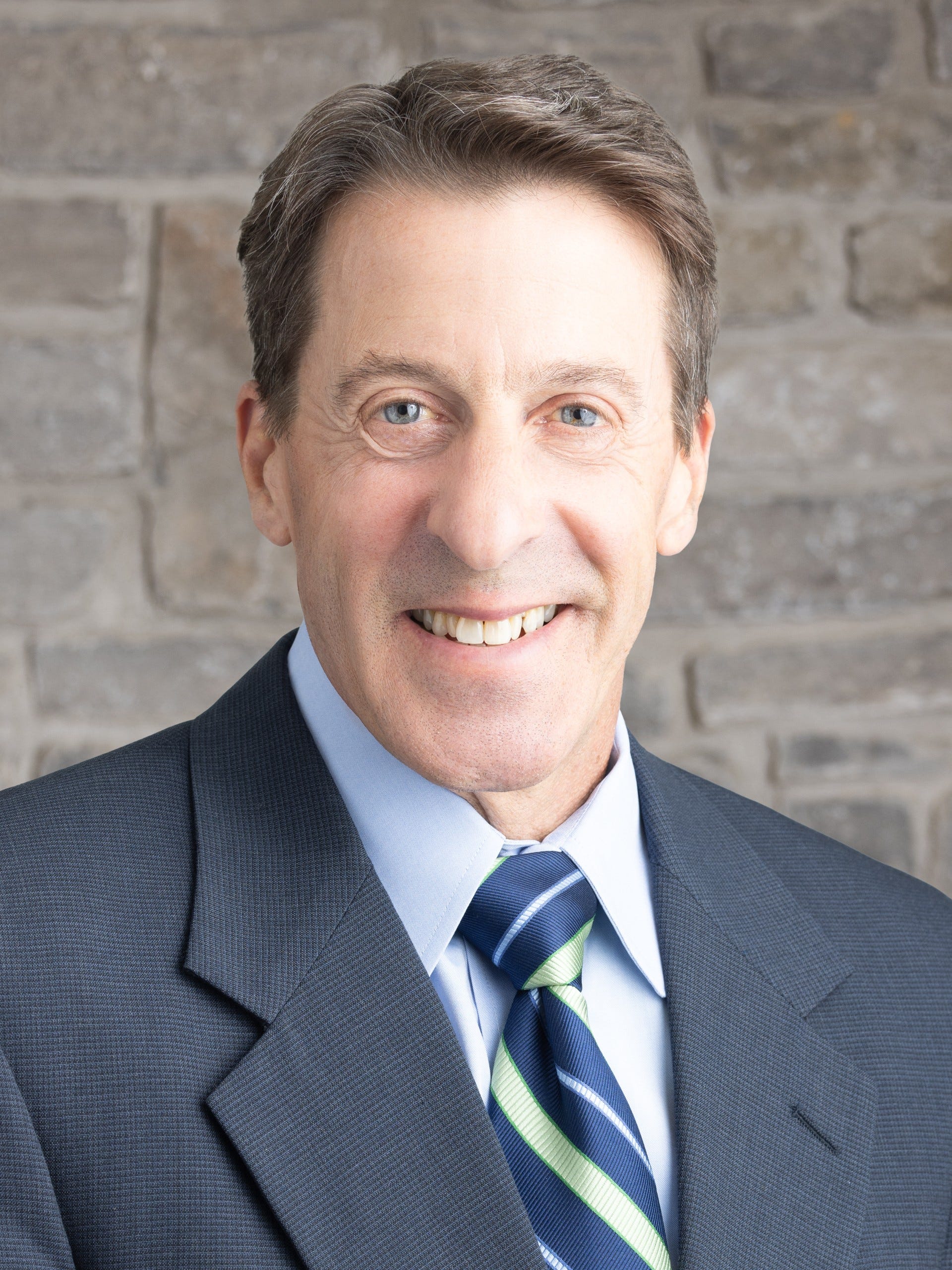
Larry Selzer leads The Conservation Fund with a simple conviction: protecting land and building strong communities are complementary goals.
As President and CEO, Selzer has helped The Conservation Fund protect more than 9 million acres of at-risk land valued at $8 billion across all 50 states. The organization’s work spans working forests and farms, recreation areas, wildlife habitat, historic landscapes, and urban green spaces.
Under his leadership, TCF has earned a reputation for speed, creativity, and impact, “finding the yes” in any complex conservation challenge. Selzer has expanded the organization’s reach to include the outdoor recreation economy, the clean energy transition, the protection of Native American cultural sites and African American historical sites, and initiatives that strengthen the connection between people and the outdoors.
Before joining The Conservation Fund, Selzer worked as a marine biologist at the Manomet Center for Conservation Sciences. He holds an MBA from the University of Virginia Darden School of Business and a Bachelor of Science in environmental studies from Wesleyan University. He serves on the board of Weyerhaeuser, is the board chairman of Leading Harvest and is an avid runner, hunter, fisherman and birder.
Larry, I think you're right, and I'd push it one step further. Most conservation groups still raise money like it's the Era of Regulation. Donors fund the fight against something. Convergence asks them to fund the build, and that's a harder story to tell.
I've seen a small version of this on the Henry's Fork. The river stays fishable because irrigators and scientists work it out before the water gets allocated. In my experience donors get behind that once they see it. But it takes a different pitch than "stop the bad project."
Your insurance numbers might be the bridge. Disaster losses growing 5 to 7 percent a year is the kind of number a business-minded donor already understands. Have you seen individual donors respond to that risk case the way corporate partners do?
Spot on, Larry.
And you will be pleased to know that Convergence is already happening. Though sadly mostly outside the US.
The Rosetta Initiative is the catalyst. Chat? Do check me out with Bob first :)
The "private" goods (multi-year forward pricing of risk) held by the insurance industry are in fact (but not net in practice :( ) a public good. Citizens "own" those hazards, and as you say have mistakenly assumed government and capitalism will deliver wellbeing.
Are you goinig to NYCW? I may be able to get you a hot ticket for Anthony Hobley's session.
Thanks, Bob, for bringing Larry and I together.
Mike